
• Skip to main content
  • Skip to primary navigation
  • GotSport Onboarding
  • DONATE
Eastern NY Youth Soccer Association

Eastern NY Youth Soccer Association

  • About
    • About ENYYSA
    • Meet the Officers
    • Zero Tolerance Policy
    • Rules & Bylaws
    • Member Leagues
    • Our Affiliates
    • ENY Hall of Fame
    • Sponsorships & Advertising
    • Contact Us
  • Programs
    • TOPSoccer
    • Trainers
      • List of Verified Trainers
    • College Scholarships
    • Futsal
    • Referees
  • Safe Soccer
    • ENYYSA Safe Soccer
    • SafeSport Training
    • Heads Up – Concussion Awareness
    • Background Checks
      • Alternate Background Checks
    • Safer Sports Tools
    • COVID-19
  • ODP
    • What is ODP?
    • Tryouts 2025/26
    • Tryout Results
    • ODP Schedule
    • ODP Coaching Staff
    • Regional/National Pool Selections
    • ODP International Tour
    • ODP Scholarship
    • ODP Contacts
  • Competitions
    • ENY State Cup
    • Sanctioned Tournaments
    • USYS National League
  • Coaching
    • Coaching Education
    • Coaching Resources
    • Instructional Staff
    • US Soccer Learning Center
  • Resources
    • Documents & Forms
    • Insurance Summary
    • Indoor Facilities Insurance
    • Travel Authorization
    • Out Of State Player Registration
    • USYS Award Nomination – The Ball
    • Gender Identity
    • USYS Diversity, Equality and Inclusion
    • Employment Opportunities
    • GotSport Onboarding
    • DONATE
SECOND TOP LOGO (THE ONE ON THE RIGHT)

Coaching Education

Offering a “C” Coaching Course in Colonie

By Randy Vogt, Director of Public Relations, Eastern New York Youth Soccer Association

April 24, 2026-This article is brought to us by the letter “C.” The Eastern New York Youth Soccer Association (ENYYSA) is very pleased to host a “C” coaching course starting this summer in Colonie.

“The C is a great course that is a vital stepping stone for those that wish to move onto the B and A courses,” commented Tim Bradbury, Director of Coaching for Eastern New York. “The C is the foundation of all high-level licenses and is full of vital teaching strategies and game concepts.“

Register for the “C” coaching course kicking off on August 9 in Colonie.

The course encompasses the various tasks of the coach, including training sessions, coaching games, leading players, leading the teams and managing a performance environment plus vital theory sessions on periodization and principles of play with field sessions. 

Any questions on either course can be directed to Tim Bradbury.

With over 100,000 youth soccer players––both boys and girls––and more than 25,000 volunteers, the non-profit Eastern New York Youth Soccer Association (ENYYSA) stretches from Montauk Point, Long Island to the Canadian border, east of Route 81. ENYYSA encourages the healthy development of youth players, coaches, referees and administrators. All levels of soccer are offered––from intramural, travel team and premier players as well as Children With Special Needs. No child who wants to play soccer is turned away. ENYYSA is a proud member of US Soccer and US Youth Soccer. For more information, please log on to http://www.enysoccer.com/
Ask the Players

In addition to structured observation and session recording, one of the most effective ways to gather feedback is to ask the players themselves.

Would you describe your practices as busy and active?

  • Not at all
  • Somewhat
  • Busy
  • Very busy

Do you spend a lot of time at practice standing around waiting for things to be organized?

  • Frequently
  • Sometimes
  • Rarely
  • Never

Your coach helps you enjoy practice:

  • Frequently
  • Sometimes
  • Rarely
  • Never

Your coach pushes you to work hard:

  • Frequently
  • Sometimes
  • Rarely
  • Never

Your coach frequently uses questions and asks you to think and solve problems:

  • Frequently
  • Sometimes
  • Rarely
  • Never

Your coach is more likely to give an order than ask a question:

  • Frequently
  • Sometimes
  • Rarely
  • Never

Your coach shows interest in things you do outside of soccer:

  • Frequently
  • Sometimes
  • Rarely
  • Never

Your coach uses humor to help make training fun:

  • Frequently
  • Sometimes
  • Rarely
  • Never

Your coach treats mistakes as opportunities to learn and grow:

  • Frequently
  • Sometimes
  • Rarely
  • Never

When you make a mistake, your coach gets angry:

  • Frequently
  • Sometimes
  • Rarely
  • Never

You feel that your coach is most concerned with:

  • Winning only
  • Player development only
  • A good balance

You would say that your coach:

  • Talks all the time
  • Lets you talk
  • Helps the team talk together

Your coach presents information in a way that:

  • You easily understand
  • Is too much at once
  • Is too confusing

Complete the sentence: I wish my coach would…


___________________________________________________________________________________________________________

We All Need Feedback

By Tim Bradbury, Director of Coaching, Eastern New York Youth Soccer Association

In order to improve as a coach, we all need feedback. This is an undeniable truth. Even my coaching articles need feedback too. Yet in most clubs, meaningful feedback is almost nonexistent. Many coaches operate in a vacuum, without a technical lead to provide support and guidance. Some are hesitant to share honest reflections on their sessions, while others lack the skill, structure, or time to critically reflect in a way that leads to real growth.

Research suggests that many coaches, without proper training in reflection, do so inaccurately—sometimes up to 80% incorrectly. This highlights three key areas for improvement:

  • Clubs should create environments where coaches receive regular observation and formative feedback, ideally supported by video analysis.
  • Clubs should upskill coaches in reflective practice so that reflection leads to clear learning plans and intentional development.
  • We should always ask the players. Players tend to provide honest, concise and valuable feedback.

Below is a simple “Ask the Players” tool that coaches can use to gather meaningful insights and support their own development.

ASK THE PLAYERS

In addition to structured observation and session recording, one of the most effective ways to gather feedback is to ask the players themselves.

Would you describe your practices as busy and active?

  • Not at all
  • Somewhat
  • Busy
  • Very busy

Do you spend a lot of time at practice standing around waiting for things to be organized?

  • Frequently
  • Sometimes
  • Rarely
  • Never

Your coach helps you enjoy practice:

  • Frequently
  • Sometimes
  • Rarely
  • Never

Your coach pushes you to work hard:

  • Frequently
  • Sometimes
  • Rarely
  • Never

Your coach frequently uses questions and asks you to think and solve problems:

  • Frequently
  • Sometimes
  • Rarely
  • Never

Your coach is more likely to give an order than ask a question:

  • Frequently
  • Sometimes
  • Rarely
  • Never

Your coach shows interest in things you do outside of soccer:

  • Frequently
  • Sometimes
  • Rarely
  • Never

Your coach uses humor to help make training fun:

  • Frequently
  • Sometimes
  • Rarely
  • Never

Your coach treats mistakes as opportunities to learn and grow:

  • Frequently
  • Sometimes
  • Rarely
  • Never

When you make a mistake, your coach gets angry:

  • Frequently
  • Sometimes
  • Rarely
  • Never

You feel that your coach is most concerned with:

  • Winning only
  • Player development only
  • A good balance

You would say that your coach:

  • Talks all the time
  • Lets you talk
  • Helps the team talk together

Your coach presents information in a way that:

  • You easily understand
  • Is too much at once
  • Is too confusing

Complete the sentence: I wish my coach would…


___________________________________________________________________________________________________________

Creating Effective, Player-Centered Learning Environments

By Tim Bradbury, Director of Coaching, Eastern New York Youth Soccer Association

Great soccer coaching goes far beyond organizing drills and managing games. The most effective coaches create environments where players feel valued, stay highly engaged, and develop both technically and personally. The following Best Practices outline a player-centered approach that promotes learning enjoyment, and long-term development.

Create an Engaging Learning Environment

One of the most important principles in coaching is maximizing player involvement. Avoid traditional approaches that rely heavily on running laps, standing in lines or long lectures. Players learn best through active participation.

Sessions should begin immediately with purposeful activity. Get a ball rolling as quickly as possible and maintain a high level of engagement throughout training. When players are constantly moving, thinking and solving problems, learning accelerates.

Equally important is ensuring that no player feels excluded. Avoid activities where players stand out or wait excessively for their turn. Every child should feel included and involved at all times.

Players also need physical challenge. They want to sweat, compete and be pushed appropriately. If training is too easy, motivation and focus quickly decline.

Build Relationships and Support Player Well-Being

Effective coaching begins before the session starts. Greeting each player individually and checking on their well-being helps build trust and shows genuine care. A positive relationship between coach and player creates a stronger learning environment.

Players also value individual attention. Make it a priority to provide at least one piece of individual coaching feedback to every player in each session. These moments of recognition are meaningful and help players feel seen and valued.

Remember that it is the players’ team—not the coach’s. Encourage their voices, allow input into session activities when appropriate and create opportunities for ownership and leadership.

Maximize Learning Through Activity-Based Coaching

Training sessions should emphasize learning through doing rather than listening. Avoid stopping an entire activity to coach a single player. Instead, use brief individual interventions or coach within the flow of practice.

When managing multiple activities, maintain awareness of all players and hold them accountable. Players respond positively when they feel the coach is fully engaged and attentive.

Encourage collaboration among players. When players communicate, share ideas and solve problems together, learning becomes deeper and more meaningful than when the coach dominates the conversation.

Communicate with Purpose and Clarity


Communication is one of the coach’s most powerful tools. Effective coaches use concise, knowledge-based instruction, speak less and listen more, use language that creates clear mental pictures and train their voice to use appropriate volume, rhythm, and tone.

Too many words can hinder learning. Clear, precise communication helps players understand and retain information more effectively.

Demonstrations should also be purposeful. Show techniques slowly and highlight key details such as body position, hip movement, contact with the ball and surface of the foot used. Frequent and detailed modeling helps players visualize success.

Body language also matters. Positive posture, energy and engagement communicate confidence and encouragement to players.

Use Effective Teaching Strategies

Great coaching requires understanding how players learn. Coaches should master a range of coaching interventions and know which methods best support learning, avoid treating beginners like experts, adapt expectations and provide appropriate guidance, use questions to help players apply knowledge rather than guess and provide appropriate challenges that stretch ability without overwhelming players.

Learning should continue beyond the field. Encourage players to reflect on sessions by discussing key points during water breaks or at the end of training. Assign simple follow-up tasks such as writing reflections or drawing ideas, which helps reinforce learning.

Balance Learning and Performance

Coaches must understand the difference between immediate performance and long-term learning. While performance in the moment may fluctuate, true development comes from consistent challenge, reflection and practice. Studying how people learn helps coaches design better training experiences while still supporting competitive performance.

Conclusion

Effective soccer coaching is built on engagement, relationships, purposeful communication and player-centered learning. By keeping players active, valuing their voices, communicating clearly and designing meaningful challenges, coaches create environments where players develop skills, confidence, and a lifelong love for the game.

Ultimately, the best coaches do more than teach soccer—they create experiences that help players grow as learners, teammates and individuals.

Eastern New York Offering Advanced Coaching Courses

Director of Coaching Course in Selden

“B” in Uniondale

“C” in Central Islip and Colonie

“D” in Goshen

Register for the “B” Coaching Course in Uniondale

By Randy Vogt, Director of Public Relations, Eastern New York Youth Soccer Association

March 3, 2026-The U.S. Soccer National B License Course is in a blended format and is hosted by the Eastern New York Youth Soccer Association (ENYYSA) and the Long Island Soccer Club.

The “B” is a 6-month online and in-person course. It combines an online experience, assignments, small group meetings, independent learning and two 4-day in-person meetings. The course is designed to help coaches who work in elite-level training and playing platforms.

The course starts on July 7, in-person meetings on September 1-4 and November 1-4 at Mitchel Athletic Complex and the “B” course concludes on December 20. 

Register here.

Any questions can be directed to Eastern New York’s Director of Coaching, Tim Bradbury.

With over 100,000 youth soccer players––both boys and girls––and more than 25,000 volunteers, the non-profit Eastern New York Youth Soccer Association (ENYYSA) stretches from Montauk Point, Long Island to the Canadian border, east of Route 81. ENYYSA encourages the healthy development of youth players, coaches, referees and administrators. All levels of soccer are offered––from intramural, travel team and premier players as well as Children With Special Needs. No child who wants to play soccer is turned away. ENYYSA is a proud member of US Soccer and US Youth Soccer. For more information, please log on to http://www.enysoccer.com/

Register for the “D” Coaching Course in Goshen

By Randy Vogt, Director of Public Relations, Eastern New York Youth Soccer Association

February 26, 2026-The US Soccer “D” course, hosted by the Eastern New York Youth Soccer Association (ENYYSA) and Tobar Futbol Academy, is a blended course.

It’s eight weeks online and two weekends for in-person meetings. The D course is focused on players Under-7 to Under-12. The blended format for this course combines an online experience, assignments, small group meetings, independent learning and in-person meetings that combine classroom and field.

Webinar on March 30, in-person meetings on April 25 and 26 plus May 16 and 17 at the Hudson Sports Complex in Goshen. 

Register here.

Any questions can be directed to Eastern New York’s Director of Coaching, Tim Bradbury.

With over 100,000 youth soccer players––both boys and girls––and more than 25,000 volunteers, the non-profit Eastern New York Youth Soccer Association (ENYYSA) stretches from Montauk Point, Long Island to the Canadian border, east of Route 81. ENYYSA encourages the healthy development of youth players, coaches, referees and administrators. All levels of soccer are offered––from intramural, travel team and premier players as well as Children With Special Needs. No child who wants to play soccer is turned away. ENYYSA is a proud member of US Soccer and US Youth Soccer. For more information, please log on to http://www.enysoccer.com/
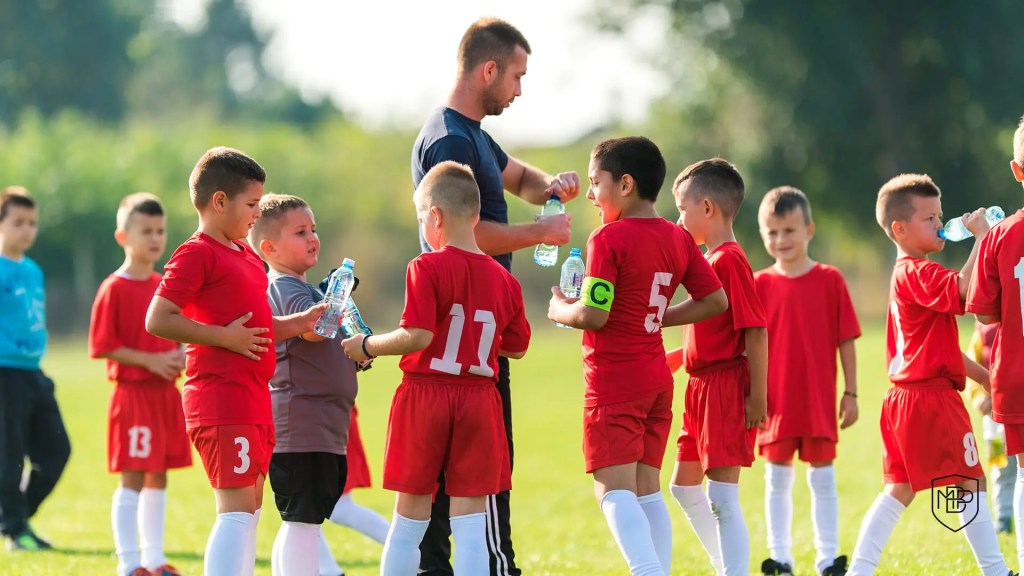
Choosing the Right Environment For Your Child in Youth Soccer

By Tim Bradbury, Director of Coaching, Eastern New York Youth Soccer Association

With so many leagues, clubs, training organizations—Super This, Elite That—and now pre-academy teams and countless playing platforms, it’s easy to see how difficult it is for parents to choose the right place for their child to play.

What should be apparent is that decisions should not be made based on hype, headlines or the marketing materials clubs, teams and training organizations produce. I would also avoid getting caught up in debates about which league is “better.” Leagues can differ greatly by age and level—Division 1 in one area may look more like Division 3 in another.

Be cautious of social media posts as well. Almost any claim can be made online, and winning is often promoted as the primary measure of success.

Before working through the suggestions below, take time to reflect honestly on what you truly want for your son or daughter and their experience in youth sport. Be brutally honest. If your “why” is centered on sport for life, fun and enjoyment, long-term athletic development, and the growth of social and life skills, then this guide may be helpful.

If your “why” is solely about winning, collecting trophies or chasing a scholarship, the best advice I can offer is to hire a guidance counselor now.

To make an informed decision, you need to gather key information—and then observe whether that information is a living document or simply empty words on paper with no impact on the daily workings of the team or club.

Documents to Collect

  1. The club or team’s teaching philosophy and long-term aims
  2. The club’s game model and game idea through the 7v7, 9v9, 11v11 progression, which tells the story of how the teams play
  3. A list of core values and how they influence training and game day
  4. Qualifications and experience of coaches in the relevant age group
  5. Nature and frequency of internal coach development. How is the club helping the coaches improve their craft?
  6. Number of players in the club at different ages and rates of attrition
  7. Club-hosted events that demonstrate genuine family involvement
  8. Coach attrition rate within the organization
  9. Examples of the teaching curriculum from age group to age group
  10. Game formats used (4v4, 7v7, 9v9, 11v11)
  11. Expected annual “soccer diet” by age (how many soccer exposures per year)
  12. Tryout process and selection methodology
  13. Club hierarchy and lines of communication
  14. Parent interaction and initiatives. Are you part of the process or just the ATM?

People to Meet and Things to Observe

  • The age-group head coach, while coaching both training sessions and games
  • Parents within the club from both younger and older age groups
  • A board meeting—see how long it takes before “player development” is discussed
  • The age group coordinator
  • If the club uses an external training company, ask to see their curriculum and observe their staff in action
  • Sit in on a monthly coaches’ meeting

I appreciate that all of the above requires time and effort. However, given the importance of this decision, the increasing number of players leaving the game at younger ages, the reduction of physical education in schools and the growing number of children struggling with obesity, is there really a better way to spend your time?

With over 100,000 youth soccer players––both boys and girls––and more than 25,000 volunteers, the non-profit Eastern New York Youth Soccer Association (ENYYSA) stretches from Montauk Point, Long Island to the Canadian border, east of Route 81. ENYYSA encourages the healthy development of youth players, coaches, referees and administrators. All levels of soccer are offered––from intramural, travel team and premier players as well as Children With Special Needs. No child who wants to play soccer is turned away. ENYYSA is a proud member of US Soccer and US Youth Soccer. For more information, please log on to http://www.enysoccer.com/

Register for the Director of Coaching License Course

By Randy Vogt, Director of Public Relations, Eastern New York Youth Soccer Association

February 18, 2026-The U.S. Soccer CTL Level 1 Course for Club Technical Leaders, hosted by the Eastern New York Youth Soccer Association (ENYYSA), is a blended course.

The blended format combines an online experience, assignments, small group meetings, independent learning, in-person meetings and summative assessment interviews.

Meetings in July at Suffolk Community College in Selden, Long Island, virtual meetings after that until October 5.

Register here.

Any questions can be directed to Eastern New York’s Director of Coaching, Tim Bradbury.

With over 100,000 youth soccer players––both boys and girls––and more than 25,000 volunteers, the non-profit Eastern New York Youth Soccer Association (ENYYSA) stretches from Montauk Point, Long Island to the Canadian border, east of Route 81. ENYYSA encourages the healthy development of youth players, coaches, referees and administrators. All levels of soccer are offered––from intramural, travel team and premier players as well as Children With Special Needs. No child who wants to play soccer is turned away. ENYYSA is a proud member of US Soccer and US Youth Soccer. For more information, please log on to http://www.enysoccer.com/
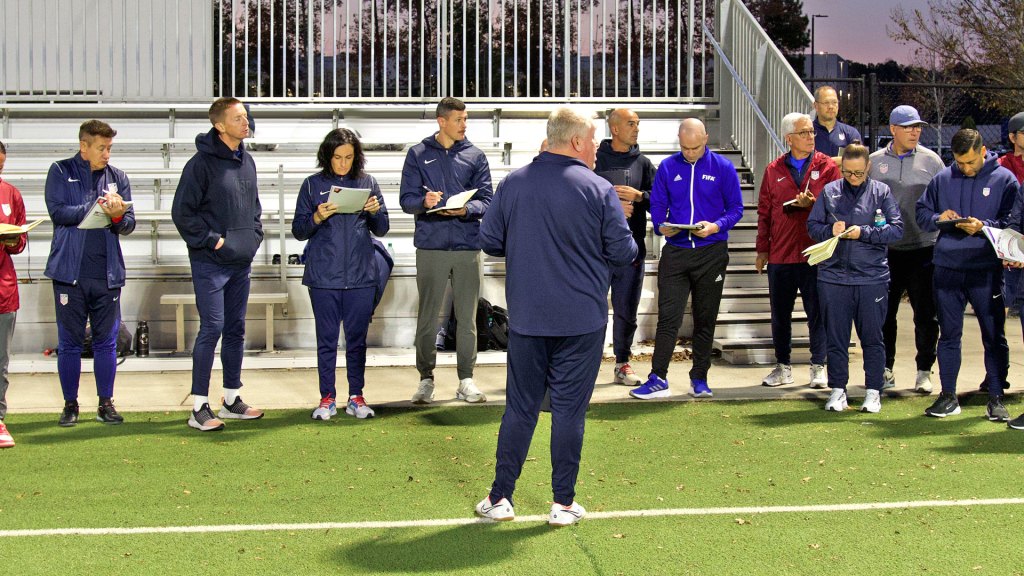
Offering “C” Coaching Courses in Central Islip and Colonie

By Randy Vogt, Director of Public Relations, Eastern New York Youth Soccer Association

February 12, 2026-The Eastern New York Youth Soccer Association (ENYYSA) is very pleased to host “C” coaching courses this year in two towns starting with a “C,” Central Islip and Colonie.

“The C is a great course that is a vital stepping stone for those that wish to move onto the B and A courses,” commented Tim Bradbury, Director of Coaching for Eastern New York. “The C is the foundation of all high-level licenses and is full of vital teaching strategies and game concepts.“

Register for the “C” coaching course kicking off on April 26 in Central Islip.

Register for the “C” coaching course kicking off on August 9 in Colonie.

The course encompasses the various tasks of the coach, including training sessions, coaching games, leading players, leading the teams and managing a performance environment plus vital theory sessions on periodization and principles of play with field sessions. 

Any questions on either course can be directed to Tim Bradbury.

“C” you in either Central Islip or Colonie in 2026!

With over 100,000 youth soccer players––both boys and girls––and more than 25,000 volunteers, the non-profit Eastern New York Youth Soccer Association (ENYYSA) stretches from Montauk Point, Long Island to the Canadian border, east of Route 81. ENYYSA encourages the healthy development of youth players, coaches, referees and administrators. All levels of soccer are offered––from intramural, travel team and premier players as well as Children With Special Needs. No child who wants to play soccer is turned away. ENYYSA is a proud member of US Soccer and US Youth Soccer. For more information, please log on to http://www.enysoccer.com/
Next Page »
Eastern NY Youth Soccer Association
  • Contact Us
  • About ENYYSA
  • Member Leagues
  • Our Affiliates
  • Resources
  • Terms and Conditions
FOOTER LOGO
Privacy Policy
This website is powered by SportsEngine's Sports Relationship Management (SRM) software, and is owned and subject to the Eastern NY Youth Soccer Association privacy policy.
Powered by SportsEngine